You may run your business and personal finances separately, but lenders do not always see a clean wall between the two.
Business credit can affect your personal score when a business account is tied to you personally, reported by the issuer, guaranteed by you, reported after delinquency or default, or opened with a hard inquiry. The key is knowing which accounts cross over and what a mortgage lender may see before you apply.
How can business credit affect your personal score?
Business credit affects your personal score only at certain crossover points, not simply because you own a business.
Consumer credit and business credit are kept in different reporting systems. A personal credit report is built for you as an individual. A business credit file is built for the company. The CFPB and Credit Builders Alliance explain that some companies have both consumer and commercial reporting systems, while some focus on one side only, in their business credit overview.
The confusion starts because many small business owners are also the person behind the business debt. You may be a sole proprietor, a partner, a member of an LLC, or the person who signed a personal guarantee. A personal guarantee means you promise to pay the business debt if the business does not.
Here is the practical difference:
| Business credit situation | Can it affect personal credit? | Why it matters |
|---|---|---|
| Business account with no personal liability and no consumer reporting | Usually no | It may stay in business credit systems only. |
| Business credit card reported to consumer bureaus | Yes | Payment history and balances may show on your personal report. |
| Business loan or line with a personal guarantee | Potentially yes | You may be personally responsible if the business defaults. |
| Application that pulls your personal credit | Potentially yes | A hard inquiry may appear and may affect your score. |
| Business debt that becomes personally reported after default | Potentially yes | Personal reporting can affect payment history and creditworthiness. |
A consumer report is a personal credit report about an individual. If a lender reviews you as an owner, officer, principal, co-signer, or guarantor, that information is treated differently than a report about the business entity itself.
The main takeaway is simple: business debt is not automatically personal debt, but it can become personal credit information when you are personally liable, when the issuer reports it, or when the account becomes delinquent and is tied back to you.
Does a business credit card show up on my personal credit report?
A business credit card can show up on your personal credit report if the card issuer reports it to the consumer credit bureaus.
There is no single rule that every business card issuer follows. Experian says some issuers report business credit cards only to commercial bureaus, some report to consumer bureaus, and some report only negative information such as late payments. You can read Experian’s explanation of business credit cards and personal credit reports.
This matters because a reported business card can affect your personal credit in two main ways. First, it can affect payment history, which is your record of paying accounts on time. Second, it can affect credit utilization, which means how much of your available revolving credit you are using.
Say you have a business card with a high balance because you stocked inventory or covered payroll during a slow month. If that card reports to your personal credit file, the balance may make your personal utilization look higher. That can affect your score even if the debt was used for legitimate business expenses.
A business card may also create a hard inquiry when you apply. A hard inquiry is a credit check connected to an application for credit. It may affect your credit score. After you are a customer, the issuer may also review your credit for account management. That type of review is usually a soft inquiry, which does not affect the score.
Before you rely on a business card to stay off your personal report, ask the issuer how it reports. You are not asking for a loophole. You are asking for basic information that helps you understand risk before you borrow.
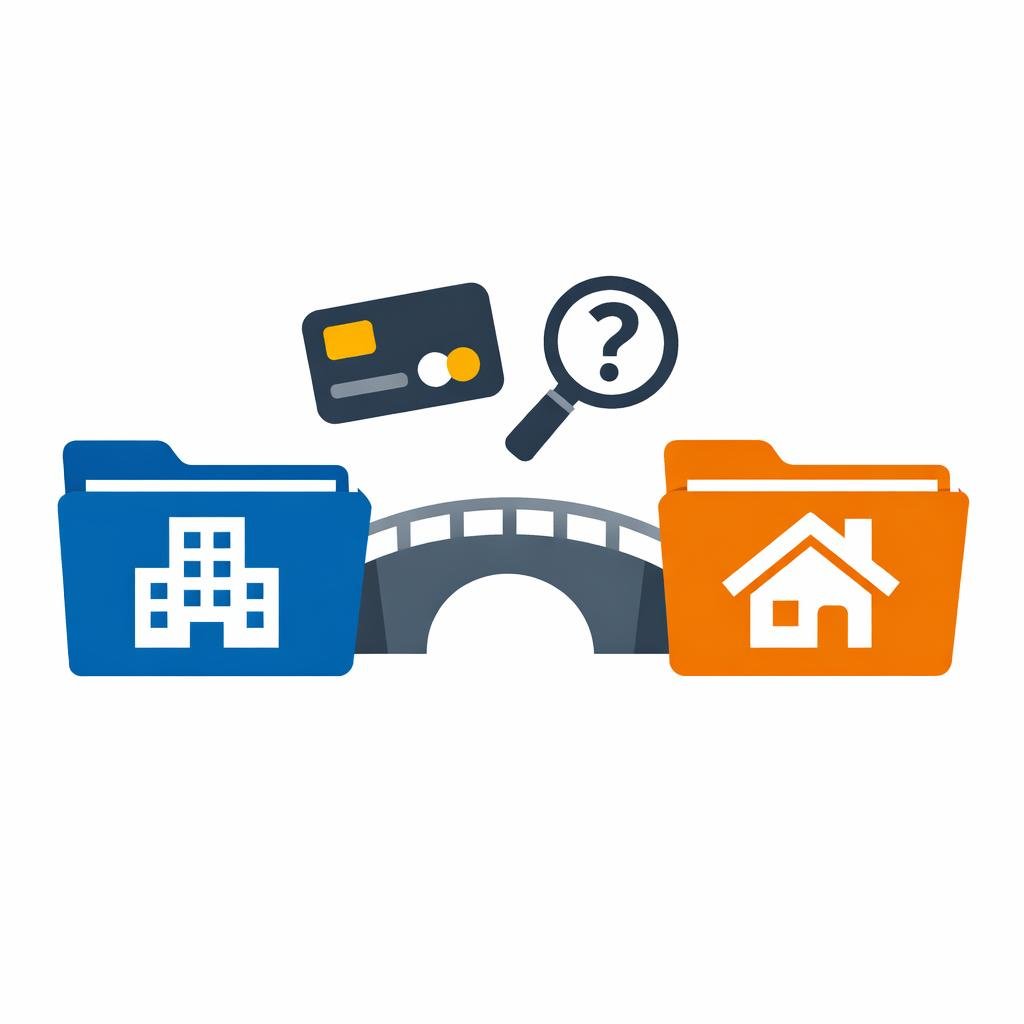
Can a personal guarantee make business debt affect my personal credit?
Yes, a personal guarantee can make business debt affect your personal credit because you are promising to pay if the business does not.
Many small business products include personal guarantees, especially when the business is new, small, or closely tied to one owner. The business may be the borrower, but the lender may also want an individual to stand behind the account. That individual is often the owner.
A personal guarantee does not mean the account must appear on your personal credit report from the start. It means your personal responsibility can matter if the business defaults. Default means the account has not been paid as agreed under the contract.
If a business account is reported to consumer credit reporting agencies because you have personal liability or guaranteed the commercial account, you should receive notice of that reporting. This is why business owners should not sign financing documents without understanding whether they are signing only for the company or also as an individual.
Watch for words like these in business financing documents:
- Personal guarantor: an individual who promises to pay if the business does not.
- Co-signer: a person who accepts responsibility for repayment along with the borrower.
- Individual liability language: wording that may say you, not only the company, are responsible for repayment.
- Collateral: property pledged to support repayment if the debt is not paid as agreed.
- Default: a failure to meet the repayment terms in the agreement.
If you are unsure what you signed, it may be worth asking the lender for copies of the application, note, card agreement, and guarantee. If a collector contacts you about business debt you do not recognize, or if a court notice arrives, speak with an attorney. Do not ignore legal papers.
Will a late business loan payment lower my personal credit score?
A late business loan payment can lower your personal credit score if the account or delinquency is reported on your personal credit file.
Payment history is a major score factor. FICO says payment history is the largest FICO Score factor at 35%. Late payments are often reported by severity, such as 30, 60, 90, 120, or 150 days late. A more severe late payment generally weighs more heavily than a less severe one.
But the first question is not only whether the payment was late. The first question is whether the late business account appears on your consumer credit reports. If it does not report personally, it may still matter to the business relationship or future business credit, but it may not be part of your personal score.
If it does appear personally, review the details carefully. Look at the creditor name, account number, dates, balance, late payment status, and whether the account is listed as individual, joint, co-signed, or guaranteed. An error in any of those fields can create real problems, especially when you are preparing for a mortgage.
Accurate, current, verifiable negative information generally stays on a personal credit report for up to 7 years. Most bankruptcies can remain for up to 10 years. No credit repair company can change accurate information just because it is inconvenient, but inaccurate, unverifiable, or outdated information can be challenged under the Fair Credit Reporting Act, often called the FCRA.
You can dispute credit report errors yourself for free. Professional help is not necessary for every issue. If the error is simple, such as an account that clearly is not yours or a payment marked late when your records show it was on time, you may be comfortable contacting the bureau directly.
Professional help can be useful when business and personal records overlap, when several bureaus report different information, when a collector reports an account you do not understand, or when you are trying to prepare clear documentation for a lender.
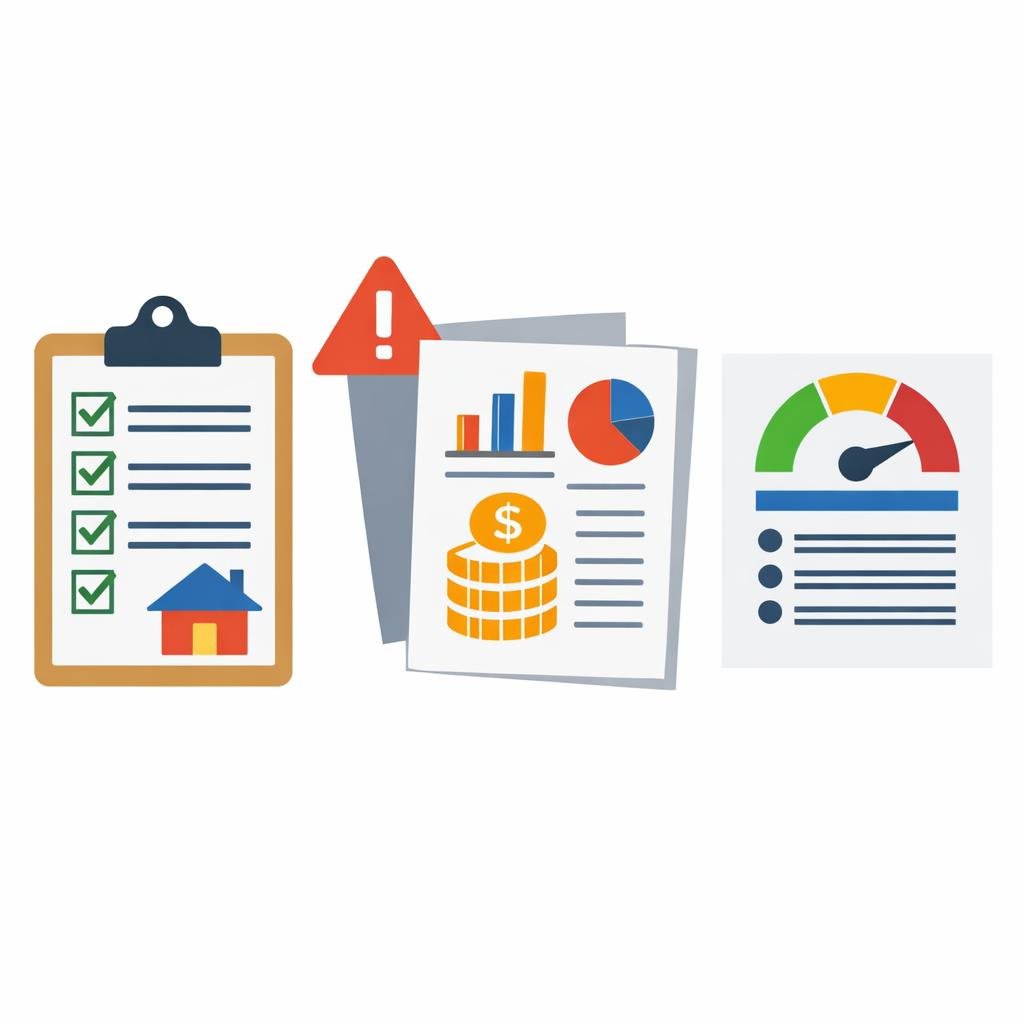
What should self-employed borrowers check before applying for a mortgage?
Self-employed borrowers should check whether business debts, guarantees, inquiries, balances, and late payments are showing on personal credit reports before applying for a mortgage.
A mortgage lender looks at more than your credit score. It may also review debt-to-income ratio, often called DTI. DTI compares monthly debt payments to income. For self-employed borrowers, business obligations on a personal credit report can create extra questions.
Fannie Mae’s Selling Guide says that when a monthly business obligation appears on a borrower’s personal credit report, a lender does not have to include it in the borrower’s DTI only if certain conditions are met. The account must have no history of delinquency, the business must provide acceptable evidence that it paid the obligation from company funds, and the lender’s business cash-flow analysis must consider the payment. The guide gives examples in its section on monthly debt obligations.
The same type of obligation may be counted in DTI if the business does not provide enough proof that the business paid it, if the lender’s cash-flow review does not reflect the expense, or if the account has a delinquency history. This is not about blaming the borrower. It is about how underwriters document risk.
Before you apply, organize the crossover points:
- Pull your personal credit reports from Equifax, Experian, and TransUnion through AnnualCreditReport.com.
- Circle any business account, business card, line of credit, equipment loan, or personally guaranteed account that appears.
- Check whether the account has late payments, high balances, disputed information, or an unfamiliar ownership status.
- Gather business bank records that may show whether company funds paid the obligation.
- Ask your mortgage professional what documentation they want before you make changes or pay any account.
Do not close accounts, move balances, settle collections, or take on new debt just to make a report look different. Those choices can affect scores, cash flow, taxes, underwriting, and legal rights. If you are unsure, talk with your mortgage professional, a HUD-approved housing counselor, a nonprofit credit counselor, or an attorney, depending on the issue.
What can you do today at no cost?
You can take several useful steps today without paying anyone and without sending disputes you do not understand.
Start by pulling your free personal credit reports. As of the CFPB’s current review, consumers can get a free credit report from each of Equifax, Experian, and TransUnion once a week through AnnualCreditReport.com. Read all three because business-related items may not appear the same way on each report.
Next, make a simple list of every business debt connected to you. Include business cards, loans, lines of credit, vehicle loans, equipment financing, and accounts where you may have co-signed or guaranteed repayment. Mark which accounts appear on your personal reports.
Then review your recent applications. If you applied for a business credit card or line of credit, look for hard inquiries. A hard inquiry connected to a real application is not automatically an error, but an inquiry you do not recognize deserves attention.
You can also call or message your issuer and ask how the account reports. Ask whether it reports to consumer credit bureaus, commercial bureaus, or only reports negative information. Keep notes of the date and what you were told.
Finally, save proof. Keep business bank statements, canceled checks, account agreements, and notices in one place. If you later need to explain an account to a mortgage lender or challenge inaccurate reporting, clear records make the conversation easier.
If you want a second set of eyes, a free credit health check can help you spot which items may deserve closer review. If you prefer to research first, our credit repair FAQ answers common questions about reports, disputes, and expectations.
How Incite Strategies Can Help
Incite Strategies helps business owners and self-employed borrowers review personal credit reports for inaccurate, unverifiable, or outdated items, including confusing business debt crossover issues, and our specialists prepare and track disputes with litigation-backed support through attorney partners when appropriate. Results vary, and the process commonly takes about 6 to 8 months, so you can learn more about how our process works or book a free credit consultation.
Frequently Asked Questions
Does every business credit card affect my personal score?
No. Some business cards report only to commercial credit bureaus, some report to consumer credit bureaus, and some report only negative information. The safest approach is to ask the issuer how it reports and then check your personal credit reports to confirm what is actually appearing.
Can I dispute a business debt on my personal credit report?
You can dispute inaccurate, unverifiable, or outdated information on your personal credit reports for free. Do not dispute information you know is accurate just because it hurts your score. If the account involves a guarantee, default, or collection, gather records before deciding whether professional help is needed.
Will paying a business collection fix my personal credit?
Paying or settling a collection can have trade-offs, and it may not change the past reporting history. Before paying, confirm the debt, who owns it, how it is reporting, and whether legal issues are involved. A nonprofit credit counselor or attorney may be helpful, depending on the situation.
Do hard inquiries from business credit applications matter?
They can. If a card issuer or lender checks your consumer credit for a business application, a hard inquiry may appear and may affect your score. A later account review by an issuer is usually a soft inquiry, which does not affect your score.
Should I wait to repair credit until after my mortgage application?
Not always. If reports contain errors, reviewing them before applying can help you avoid surprises. But do not open, close, settle, or dispute accounts during mortgage preparation without asking your mortgage professional how that action may affect underwriting and timing.
This article is for educational purposes only and does not constitute legal, financial, or credit advice. Incite Strategies, LLC is a credit repair organization as defined under the Credit Repair Organizations Act (15 U.S.C. 1679-1679j). We cannot and do not guarantee specific results or credit-score increases. Results vary based on your individual credit profile and circumstances. Accurate, current, and verifiable information cannot be removed from a credit report by any credit repair company. You have the right to dispute inaccuracies directly with the credit bureaus at no cost, and the right to cancel any credit repair contract within 3 business days. Learn more at consumerfinance.gov and ftc.gov.